.png)


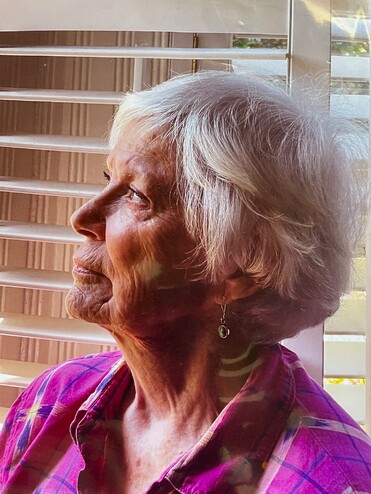
Ann Lynn Trowbridge Tollefson

About:
Ann Trowbridge Tollefson, a nationally-recognized leader in foreign language instruction and distance learning, passed away at her home in Story, Wyoming on February 22, 2026. Also an award winning artist, philanthropist and community leader, Ann was a life-long resident of Wyoming who deeply loved her home state and its children.
Ann Lynn Trowbridge was born on January 31, 1942 – a few weeks after the Japanese attack on Pearl Harbor. Her father, who worked at the time for United Airlines in Cheyenne, joined the U.S. Navy soon after. Throughout the duration of World War II he served in the Naval Air Transport Service in San Diego, while her mother worked in a nearby defense plant. Her mother later moved to Salt Lake City, Utah to be close to her family in the last year of the war. After the war ended, the family returned to Cheyenne, where her parents started the Trowbridge Company, which bought and sold oil and gas leases across the West.
Ann grew up in Cheyenne and graduated from Cheyenne High School in 1960, a member of the last class before the school was divided into Cheyenne Central and the newly created Cheyenne East High School. She then attended the University of Wyoming, earning a Bachelor of Arts degree in French in 1963, and a Master of Arts degree in French Literature in 1969. Upon graduation she briefly taught French in Torrington and Laramie, Wyoming before moving to Casper, where she taught French at Natrona County High School from 1966 to 1991. During her career she won multiple teaching awards including Wyoming Teacher of the Year in 1983.
Ann became a statewide, regional and national leader in foreign language instruction, serving as president of the Wyoming Foreign Language Teachers Association and the Pacific Northwest Council for Foreign Languages. Later in her career, she served as Foreign Language Coordinator, an administrator for the Natrona County School District and the world language content specialist for the Wyoming Department of Education.
A prolific and successful grant writer, Ann secured both state and federal funding for numerous projects that she directed, including the Wyoming Elementary Foreign Language Pilot Program, the Wyoming Middle School Articulation Project, the National Online Early Language Learning Assessment, the U.S. Department of Education Critical Language Project and WyFLES: A National Model for Delivery of Elementary School Foreign Language Programs. Under her leadership, Wyoming partnered with both Georgia and South Carolina to create Spanish programs for elementary school students.
She was project director of five area-studies projects funded by the National Endowment for the Humanities, working with national and international scholars to engage K-12 teachers in a year-long study of five regions of the world: Africa, the Far East, India, the Middle East, and Russia. She was also project director of four FLAP grants funded by the US Department of Education, and a Fulbright-Hayes Group Project Abroad to West Africa.
Upon retirement from the Natrona County School District, Ann became a private consultant sought out by school districts across the nation for her expertise in the development, implementation, and evaluation of world-language programs.
She served as the outside evaluator of the Utah and Delaware Dual Language Immersion Programs and the 17-state Chinese Flagship consortium. She also worked from its inception with the STARTALK Program funded by the US Department of Defense and led by the National Foreign Language Center. In that capacity she servedas a site-team leader and advisor, where she visited and evaluated student and teacher-preparation programs at K-12 schools, colleges and universities across the country.
Ann was elected President of the American Council for the Teaching of Foreign Languages (ACTFL) in 1997 and was awarded the ACTFL Florence Steiner Award for Leadership in K-12 Foreign Language Education in 2002. She was also named State Foreign Language Supervisor of the Year in 2007 by Pearson/Prentice Hall and the National Council of State Supervisors For Languages (NCSSFL). In addition, she was a long-time member of the Wyoming Council for the Humanities, receiving the 1989 Wyoming Humanities Award.
Ann was a frequent presenter at state, regional and national conferences, and was instrumental in training teachers in the national foreign language standards and eating the Wyoming foreign language standards.
As one of her colleagues once wrote, “Ann has single-handedly led our little state into the national limelight, convinced our legislators that foreign language is critical for Wyoming students, and developed future leaders in our profession.”
In her retirement, Ann decided to pursue her life-long interest in art. In typical fashion, she worked tirelessly to educate herself and improve her technique and skills, becoming an accomplished and award-winning watercolor artist with pieces acquired by private collections around the country. Her love of watercolor was nurtured early on by the Casper Artists’ Guild. She eventually became a member of the Guild’s Board and was instrumental in working with the City of Casper and private donors and endowments, enabling the Guild to acquire and renovate an abandoned building in the Yellowstone District. The result of her singular vision was Art321, the Guild’s new education and exhibit space.
She served on the Story Library Board, writing grants and raising money to fund its successful expansion in 2023. Ann was also devoted to her alma mater, the University of Wyoming. She served on the Board of Visitors for the College of Arts and Sciences and was named a 1994 Outstanding Alumnus. Ann was a life-long season ticket holder and passionate fan of Cowboy Football and all UW sports.
Ann was preceded in death by her parents, Gene Edward Trowbridge and Reva Park Trowbridge of Cheyenne, her brother Gene Edward Trowbridge, Jr. of Saratoga, and her daughter in law, Leslie Fisher Tollefson.
She is survived by her son Chris Tollefson ( Anna Strankman) of Story, a former journalist and retired Federal employee who served as Chief of Public Affairs for both the U.S. Fish and Wildlife Service and the Bureau of Land Management; his partner Anna Strankman, an art curator who has worked at the National Museum of the American Indian, the Seattle Art Museum and several other prominent museums across the West; her son Jeff Tollefson ( Loana Staicu) of Brooklyn, NY, an award-winning environmental journalist, former senior correspondent for Nature Magazine and a current free-lance author and writer; daughter in law Ioana Staicu of Brooklyn, Senior Editor of Nature Immunology at Springer Nature and a former Postdoctoral Fellow at Hospital for Sick Children Toronto; her grandsons Isaac Cameron Tollefson, a student at Washington University in St. Louis, and Walker Grant Tollefson, a student at St. Mary’s College in Maryland; and her beloved standard poodles, Winston and Cricket.
Her marriages to Michael Hedlund and Dr. Tollefson ended in divorce.
Ann’s ashes will be scattered at the foot of the Bighorn Mountains beside her deceased dogs, cats and birds. The family requests in lieu of flowers that donations be made in her name to Art321 of Casper or the University of Wyoming College of Arts and Sciences.
To Honor Ann's incredible Life lived, there will be two events you may attend. The first Celebration of Life with a reception will be held Wednesday, March 4, 2026 at 12:00 (Noon) at the Story Women's Club (28 N Piney Rd, Story, WY 82842).
The second Celebration of Life and reception will be in Casper, WY at 11:00AM, on Saturday, March 7, 2026, location is at the Art321Casper Artists’ Guild (321 W Midwest Ave, Casper, WY 82601).
Champion Kane Funeral Home has been entrusted with local arrangements.
Autobiographical Sketch -Ann Tollefson
My earliest memories are of my father reading to me, telling me stories of faraway places, showing me fun things we could do with numbers. An orphan at the age of ten who grew up in an age of depression and war, he had no chance at a formal education. Yet he was a learned man who read constantly, who told his children repeatedly that the only thing the world can't take away from you is your education - what you know and who you are." My mother, a truly exceptional woman who became a highly successful businesswoman in an Industry where men dominated totally, had grown up in a family where only the boys received an education. She too reminded her children of the importance of an education, always seeing that our home was full of books and magazines.
Those two, my mother and father, both lacking a formal education, instilled in me from my earliest years a love of learning, an intense need to read, to question, to learn. We played "Twenty Questions" and word games in the car. We read "National Geographic" together. We learned as a family.
In elementary school, I rode the city bus each Saturday morning to the public library, where the maximum number of books one could check out was twelve. I never took fewer than twelve and I never missed a Saturday. In junior and senior high school, I was often scolded by teachers for reading and daydreaming in class - most never understood that I was quite happily thinking and was a self-motivated and directed student. A few teachers understood and encouraged me to go as far as l could go - I loved those teachers and remember them well. The others I tolerated. At the same time, a typical teenager, I hid my love of learning from my peers, fearing that they would think me a "brain.” I was a cheerleader and president of my class, and "brains" were definitely not in vogue.
As an undergraduate at the University of Wyoming, I was not unlike a child in a candy store ... al 1 those subjects to explore and the freedom to do so! I changed majors from Geology to English to Political Science, exploring but not certain which field I wanted to enter. Through all my varied majors, however, I kept up my study of foreign languages. They weren't very "practical" vocationally, but I loved them. I was fascinated by the language and culture. In geology, I studied rocks. In political science, I studied political systems and structures. In foreign languages, I studied everything – culture, history, art, music, anthropology, political science, literature, philosophy, linguistics – in short I was trapped. I started by loving to learn, then fell in love with languages.
Consequently, I enrolled in every language class I could, still with no idea what I was “going to do” with them. The decision didn’t seem important, until just before my senior year. In a long talk with my father late one night, he suggested I pick up a minor in education, his rationale being that I would have something to fall back on should I ever need it.
My third love developed unexpectedly – the day I walked into my first class as a student teacher. When I saw the skepticism of that third-year French students at Torrington High School, I discovered the tremendous challenge of teaching. They loved their teacher, who was truly an exceptional teacher, and were not at all anxious to have a student teacher. I was again trapped.
That day, I decided to become the best teacher I could be, to teach them in such a way as to make a positive impact on their lives. From that day, I have worked, evolved and tried to develop new ideas and techniques in order to accomplish that original goal. I have taught at all levels of education, from elementary to university, and have changed my ideas often. But that original goal has stayed with me. As with all teachers, I have known failure. I have doubted myself often, but have tried to give as much to my students as I have in me. And they have given much in return.
I have known the joy of seeing a young person evolve and grow into a caring adult. I have felt the satisfaction of turning kids on to art, to poetry, to faraway places, to learning - to having them come back to see me to show what they have done and become. In a way, I have made it my life’s work to do for my students what my mother and father did for me.
As almost a postscript, I must mention the marvelous opportunity I have had in the later stages of my career to reach out even further and work with teachers. If I carry a new idea into my classroom, I change the education of approximately 100 students. But if I can help even four teachers, I have helped, indirectly but certainly, at least four hundred students. A new challenge, helping other teachers with ideas and whatever support they need to succeed, has been one of the most personally and professionally rewarding opportunities I could ever have imagined.
All of the teachers with whom I have worked are striving as I am to be the best they can be; however, they must cope with various combinations of multiple preparations, large classes, and a lack of sufficient time to be truly innovative and creative. By helping them in whatever way I can – with new ideas, with support in addressing administrative problems, with simple encouragement – I have found a tremendous feeling of accomplishment and satisfaction.
My three loves – of learning, of languages, and of teaching - have taken me down many roads, some painful, most unbelievably rewarding – and I still wonder how I ever came to be a teacher. If my parents were alive today, they would be very happy for me – I’m doing what I love and getting paid for it.


Service: